
You’ll Never Drive Past a Neon Sign the Same Way
Once you’ve watched glass bend over a flame, roadside neon stops being wallpaper. That vintage motel sign buzzing on Route 66, the old diner arrow pointing you toward pie — someone bent that by hand, tube by tube, over a paper pattern on a workbench. Every curve was calculated. Every color was chemistry.
Next time you’re rolling through a small town and catch a neon glow in the window of a bar or a barbershop, take a second look. There’s a decent chance it came from a shop like Morry’s — and an even better chance it’s been glowing longer than you’ve been alive.
That’s not nostalgia. That’s craft.
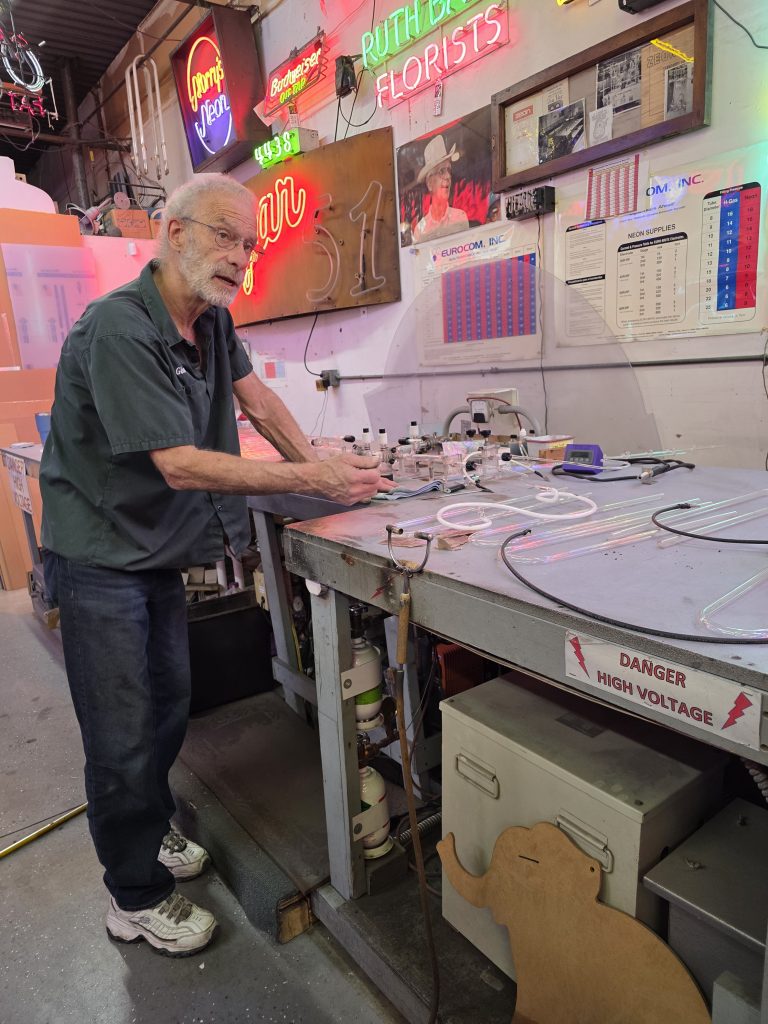
Morry’s Neon at 1330 Zuni Street in Denver is a working shop, not a display case. Morry Weseloh started bending glass in 1946, opened the business in 1985, and today his son Glen and Glen’s wife Tina keep the flame — literally — alive. Nearly eighty years of neon expertise, still operating out of a Denver workshop that smells faintly of warm glass and ozone.
Which is exactly what you want.
What You’ll See
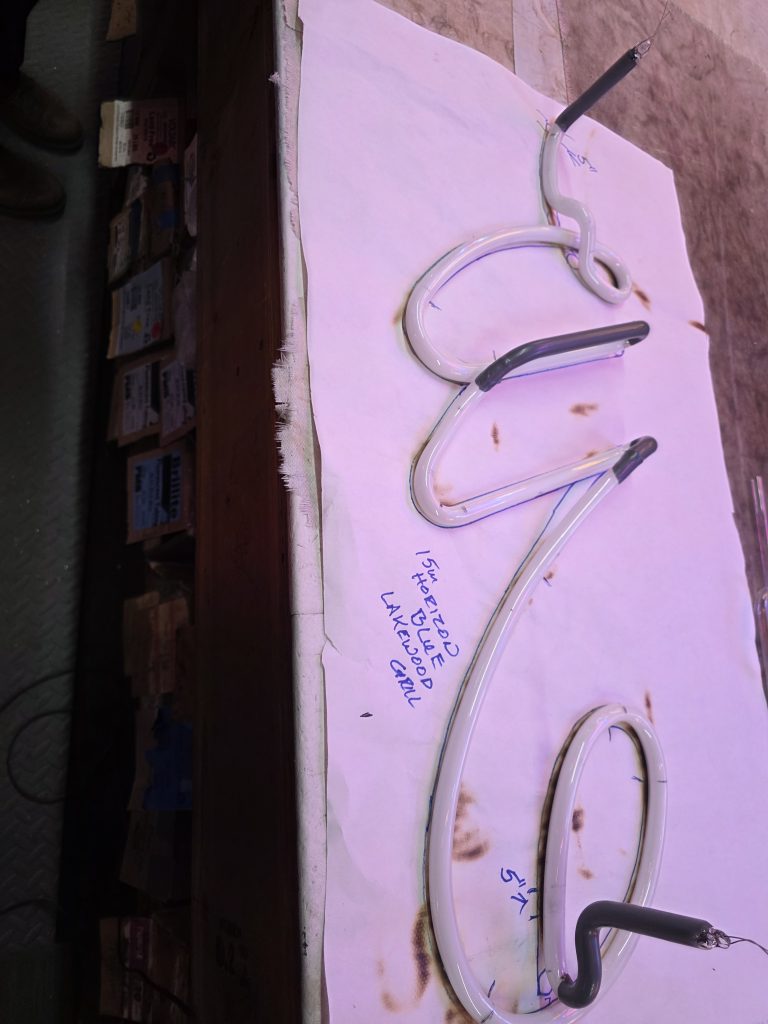
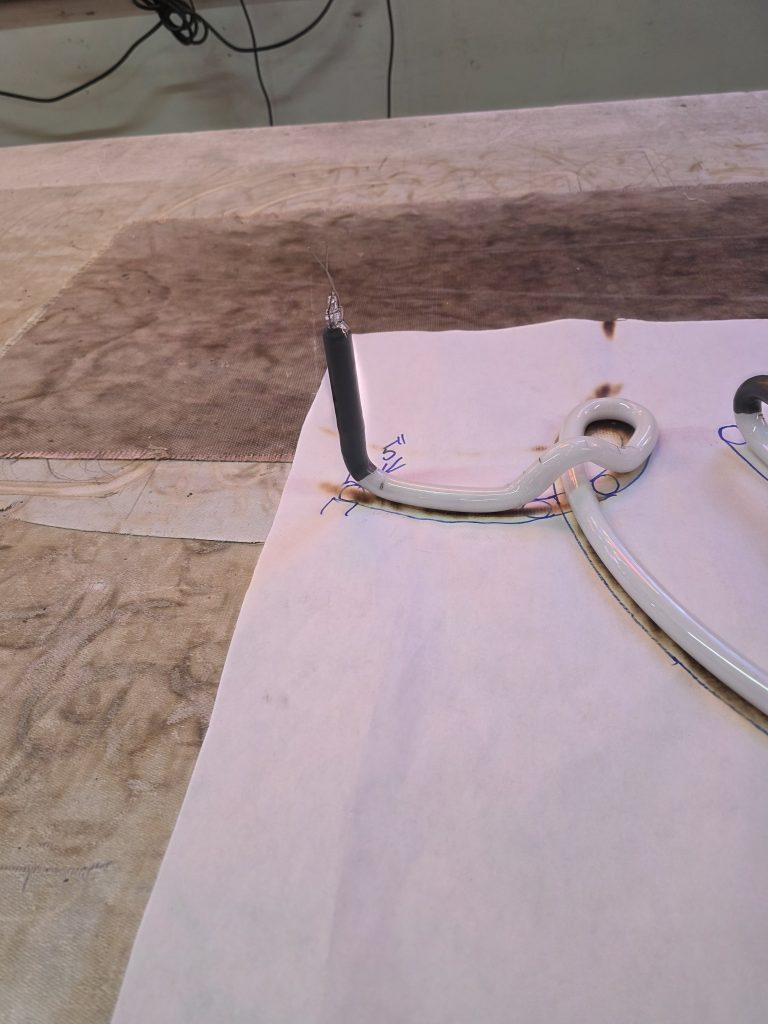
The process starts with a full-size paper pattern. The glass tube gets laid directly over the drawing and heated section by section until it softens just enough to bend. Those brown scorch marks on the paper? Evidence of heat work, not mistakes. The glass has to be rotated constantly in the flame — if one side gets hotter than the other, it collapses. Too cool and it snaps. It’s the kind of skill that lives in muscle memory, and watching it happen is genuinely mesmerizing.
The shop itself is a time capsule in motion. Miller, Budweiser, Chevrolet, Silver Dollar — signs from the 1930s through the 80s hanging side by side, each one a little monument to the era that made it.
The Neon vs. LED Question
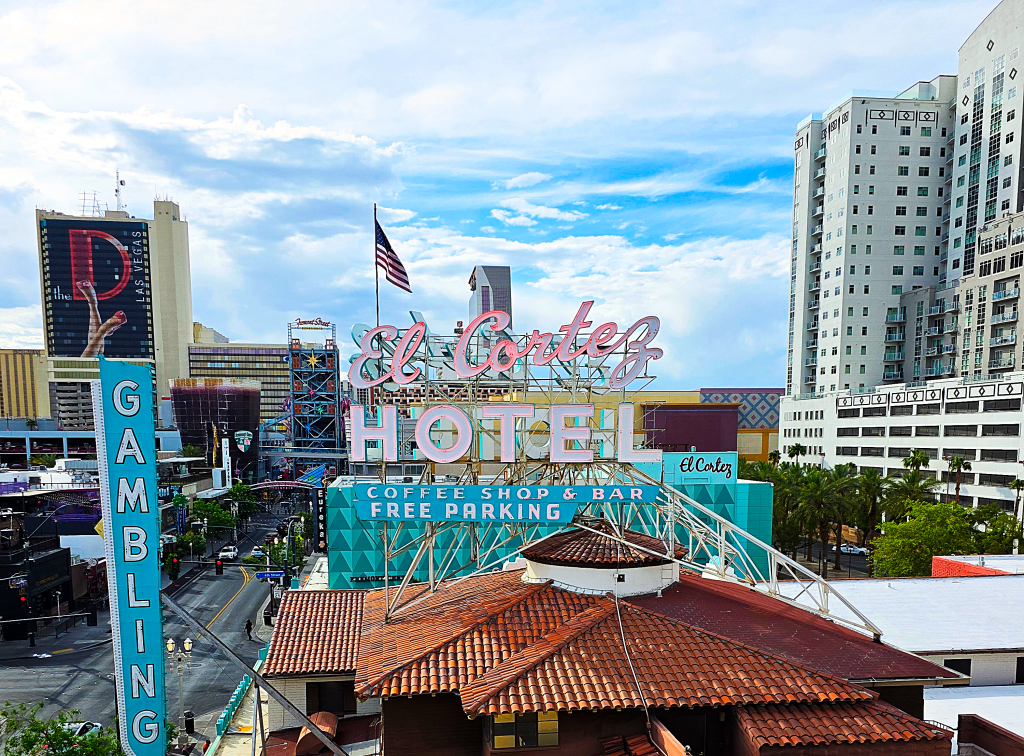
Worth knowing if you’re a preservation-minded traveler: neon and LED aren’t the same thing, even when they look similar from the road. Neon has a depth and warmth that comes from light diffusing through glass. LED is practical and adaptable, but swapping original neon for LED on a historic storefront is a bit like replacing hardwood floors with laminate. Functional? Sure. The same? Not quite.
The good news: restoring original neon on a historic building can qualify for federal and state historic tax credits, which makes preservation more financially viable than most people realize.
Plan Your Visit
Morry’s Neon isn’t a formal tourist attraction — it’s a working shop — so call ahead before you swing by.
Morry’s Neon Inc.
1330 Zuni St. #K, Denver, CO 80204
(303) 436-1675
Want to geek out on the full process? We go deep on the science and preservation angle over at Mid-Century Style Magazine.
Add a comment